
How rock conditions affect tunnel cutterhead prices
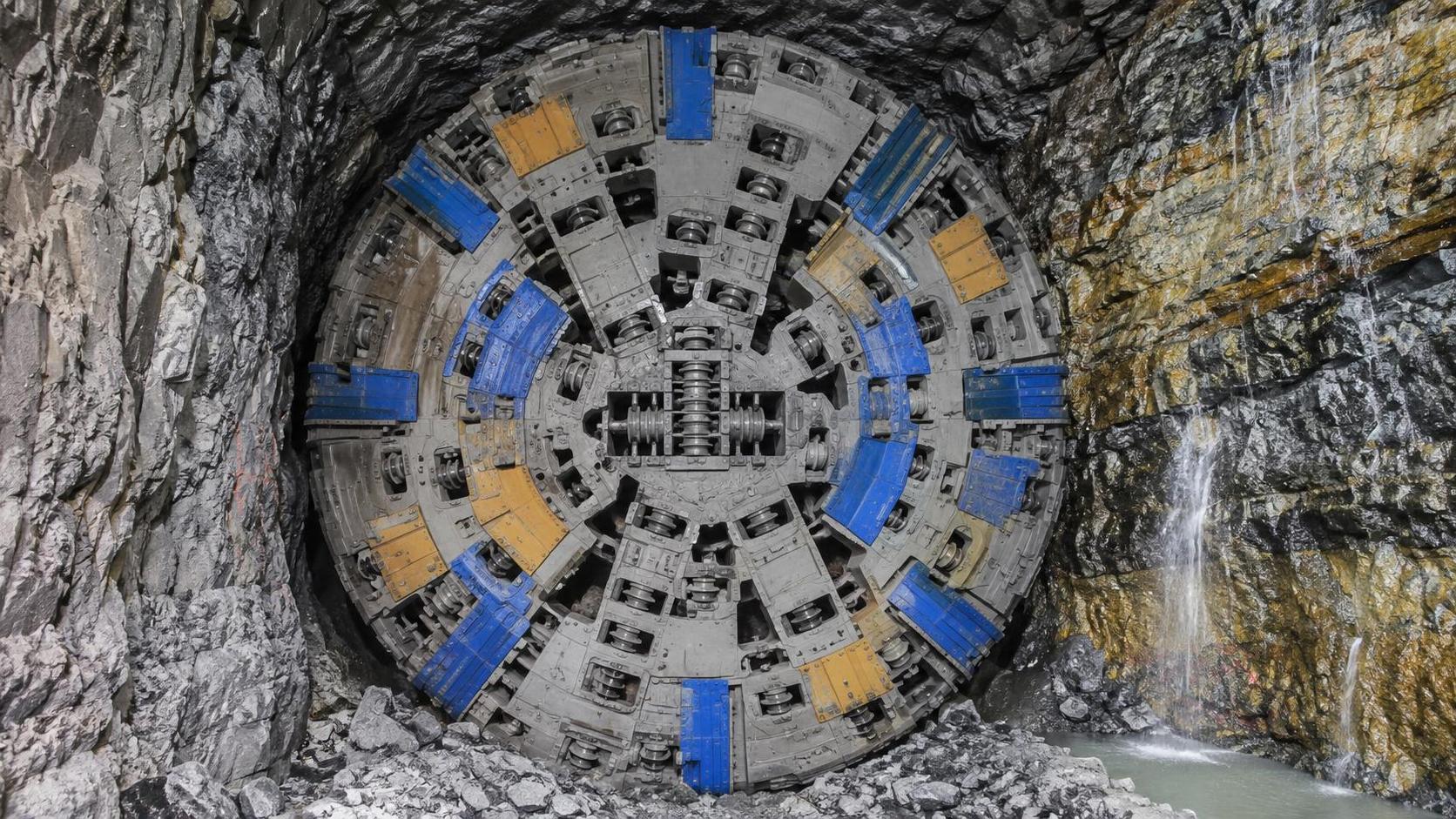
A tunnel cutterhead is not priced simply by diameter, tonnage, or the number of openings in the face. Rock conditions determine the forces the cutterhead must transmit, the wear it must survive, the tools it must carry, and the maintenance access it must provide. Two cutterheads of similar diameter can therefore have materially different quotations when one is intended for competent but low-abrasion rock and the other for abrasive, mixed, fractured, water-bearing ground.
The practical purchasing question is not “Which quotation is lower?” but “Which geological assumptions are embedded in each quotation?” A low initial price may reflect a lighter structure, less wear protection, fewer spare tool stations, or cutter specifications that are unsuitable for the expected formation. Those omissions may become far more expensive once they lead to frequent interventions, slow advance, cutter changes, or an unplanned cutterhead replacement.
Rock strength changes the structural cost of the cutterhead
Intact rock strength affects the rolling force required at each disc cutter and the total thrust transferred through the cutterhead body. In hard rock, a cutterhead must withstand repeated high loads without excessive deflection, cracking around cutter housings, or fatigue at welds and support members. This requirement influences plate thickness, spoke geometry, hub design, cutter mounting blocks, welding procedures, and the extent of non-destructive examination required during manufacture.
Hard rock does not automatically mean the most expensive cutterhead. A competent, uniform formation with limited abrasivity may allow a relatively straightforward hard-rock layout. However, price rises when the design has to address a combination of high strength, variable strength, and local impact loading. Large blocks, rock bursts, fault crossings, and abrupt interfaces can impose loads that are less predictable than those in uniform material. The cutterhead may then need stronger local reinforcement, more robust cutter housings, and a higher design margin.
Quotation comparisons should distinguish between the nominal cutterhead diameter and the load basis used for the design. A supplier should be able to clarify the assumed maximum cutter load, the design torque, the thrust load path, and the intended operating range. Without that information, buyers may be comparing steel quantities without knowing whether the structures are designed to the same duty.
A heavier cutterhead is not inherently better. Excess weight can affect machine balance, bearing loads, handling arrangements, and the installed drive capacity. The relevant issue is whether the structure is proportioned for the predicted geology and the TBM’s available torque and thrust, rather than whether it contains the greatest amount of steel.
Abrasivity often drives lifecycle cost more than initial fabrication cost
Rock abrasivity is one of the most consequential variables in tunnel cutterhead prices because it changes the consumption rate of cutters, wear plates, face protection, bucket lips, scrapers, and discharge-area components. Quartz-rich formations, hard sandstone, abrasive volcanic rock, and other highly abrasive geology can remove material from exposed surfaces even where rock strength is moderate.
The cutterhead price response is not limited to specifying harder disc cutter rings. It may include replaceable wear blocks, hardfacing, abrasion-resistant liners, protected cutter housings, reinforced muck-flow areas, and replaceable elements around the perimeter. Each option adds material, machining, welding, inspection, and assembly cost. More importantly, the design must make those components replaceable where possible; a wear system that is difficult to access can convert a relatively modest part cost into a long intervention.
Hardfacing deserves careful scrutiny in quotation reviews. It can protect selected surfaces, but it is not a universal substitute for engineered wear parts. Its effectiveness depends on the base material, deposition method, overlay thickness, expected wear mechanism, and the geometry of the protected zone. Heavy hardfacing in the wrong area can crack, detach, or create maintenance difficulties. A quotation that states only “wear-resistant treatment” does not establish what is actually included.
For this reason, the relevant comparison is not merely the tunnel cutterheads price at delivery. It is the expected combined cost of the cutterhead, initial cutters and wear parts, planned spare packages, labor for interventions, and the schedule exposure associated with premature wear. Procurement documents should separate these items rather than burying them in one lump-sum package.
Fractures and mixed ground affect layout, not only tooling
Fractured rock creates a different design problem from intact hard rock. The cutterhead must break and collect material that may arrive as chips, slabs, blocks, or loosened fragments. If the opening layout is poorly matched to the expected fragment size and muck behavior, material can accumulate at the face, obstruct discharge, or generate unstable loads on individual cutters.
In heavily jointed formations, larger openings may improve material intake, but they can reduce the stiffness of the cutterhead face. Smaller openings preserve structure but can be more vulnerable to blockage where large fragments are produced. The selected layout therefore has a direct cost effect: it influences the amount of structural reinforcement required, the number and shape of openings, the wear protection around them, and the need for internal flow-control features.
Mixed-face conditions are particularly important. A tunnel alignment may pass through rock on one side of the face and weathered material, soil, or weaker strata on the other. Uneven resistance can cause asymmetric cutter loading and uneven wear. The cutterhead may require a more versatile arrangement of disc cutters, cutting tools, scrapers, and peripheral protection than a cutterhead intended for a homogeneous rock section. In shielded operations, the face arrangement must also work with the selected excavation mode, whether EPB, slurry, or another pressure-control approach.
It is a mistake to treat “mixed ground” as a generic geological label in a technical specification. The supplier needs usable information: likely interface orientation, thickness of weaker zones, anticipated boulder content, degree of weathering, water pressure, and the length of each condition along the alignment. A vague mixed-ground description commonly produces either a conservative, expensive design or a low-priced design qualified by extensive exclusions.
Groundwater can add cost through sealing, access, and maintainability
Water-bearing fractures and high groundwater pressure change more than the excavation process. They affect cutterhead maintenance strategy. Where interventions must be performed under pressure, the cutterhead design may need tooling arrangements compatible with pressurized access, more reliable cutter retention, protected fasteners, and components that can be removed within the constraints of the cutterhead and manlock system.
For slurry shields, the interaction between cutterhead openings, slurry circulation, stone management, and wear zones can be especially significant. Openings must support excavation and material transport without creating uncontrolled flow patterns or avoidable blockage risks. In EPB applications, the cutterhead must work with conditioned spoil and maintain stable material movement through the excavation chamber. Rock that is fractured and water-bearing may behave very differently from dry, competent rock even when laboratory strength values appear similar.
These requirements can increase the cost of a cutterhead, but they should not be evaluated as optional refinements. If the project assumes pressurized cutter changes or must sustain face pressure through difficult sections, maintainability is part of functional suitability. A design that is cheap because it assumes atmospheric access may be commercially unsuitable for the actual tunnel conditions.
Disc cutter selection is linked to geology, but it should not be hidden inside the cutterhead quote
Disc cutter diameter, bearing capacity, ring material, ring profile, mounting type, and quantity are closely connected to rock conditions. Larger cutters can carry higher loads and may provide better performance in hard rock, but they also require larger, stronger housings and influence cutterhead geometry. The number of cutters is not a reliable indicator of value by itself; spacing, load distribution, gauge protection, and compatibility with the machine’s thrust and torque envelope matter more.
Procurement teams should request a clear separation between the cutterhead body and the cutter package. The offer should identify:
- cutter type, diameter, ring profile, and rated load;
- the number of face, gauge, and center cutters included;
- the assumed geological range for cutter selection;
- cutter housing and retention design;
- recommended initial spares and the basis for that recommendation;
- which wear components are replaceable, welded, or integral to the structure.
This separation makes it easier to compare alternatives. One supplier may include a complete initial cutter set and wear package, while another may quote only the steel structure with empty housings or basic tooling. Both may be described as a cutterhead quotation, but they do not represent the same scope.
Geological uncertainty has a price, whether visible or not
The quality of the ground investigation has a direct influence on pricing confidence. Borehole logs, core recovery, uniaxial compressive strength, Cerchar Abrasivity Index results where available, discontinuity mapping, groundwater data, and anticipated transition zones give designers a basis for selecting tooling and protection. Where this information is incomplete, suppliers may include a contingency, restrict their performance responsibility, or provide a base design that requires later modification.
A very low quotation can be a warning sign when the geology is uncertain. It may be based on the most favorable interpretation of the available data. The commercial risk is then transferred to the purchaser through variation clauses, exclusions for abnormal wear, or charges for later modification. Conversely, a highly conservative offer may include protection and tooling that the alignment does not justify. Neither outcome is ideal.
The better approach is to ask suppliers to state their geological design envelope explicitly. This should include the rock-strength range, abrasivity assumption, expected blockiness or joint condition, groundwater assumptions, and exclusions. If the alignment crosses several geological domains, the proposal should identify whether one universal cutterhead is intended or whether specific zones require different tool configurations, replaceable wear kits, or contingency components.
What should be normalized before comparing quotations
Price comparisons are most useful after the scope has been normalized. The following items frequently create misleading differences between bids:
Manufacturing quality should not be treated as an administrative detail. Cutterheads operate under cyclic loading, abrasive wear, and high torque. The quality requirements for critical welds, material traceability, machining of cutter interfaces, and inspection records should be aligned with the project specification and applicable contractual requirements. A lower price that results from reduced inspection scope may be difficult to assess until a defect appears in service.
Evaluate the cost of change, not just the cost of supply
Geology can change after cutterhead manufacture has started or after excavation begins. The commercial consequences depend on how adaptable the design is. A cutterhead with standardized replaceable wear blocks, accessible cutter mounts, and well-documented modification interfaces can be easier to adapt than one that relies on welded-in components. This does not mean every project should pay for maximum flexibility. It means the cost of foreseeable geological variation should be evaluated before award.
Useful commercial questions include whether additional cutter stations can be installed, whether cutter type changes require structural modification, whether worn protection can be renewed in a planned shutdown, and what spare parts can be manufactured within the project schedule. Suppliers should also identify which changes would affect balance, torque demand, or certification documentation.
Delivery timing matters here. Cutterhead fabrication, machining, assembly, inspection, and trial fit-up are specialized activities. If the procurement schedule leaves no allowance for design clarification, geological review, or acceptance inspection, buyers may be forced to accept a design that has not been fully matched to the ground model. Speed can be valuable, but it should not eliminate the technical checkpoints that prevent costly rework.
A defensible purchase decision starts with a common geological basis
The most reliable way to assess cutterhead pricing is to issue the same geological data package and functional requirements to every bidder, then require each proposal to show its assumptions. The comparison should separate base cutterhead cost from cutters, wear parts, spares, transport, inspection, support, and any provisional allowances for uncertain ground. It should also record exclusions in a form that engineering, commercial, and project teams can review together.
Rock conditions affect tunnel cutterhead prices because they determine the required resistance to force, abrasion, impact, blockage, water pressure, and maintenance constraints. The right quotation is not the one with the lowest fabrication figure. It is the one whose design basis matches the ground conditions, whose scope is transparent, and whose expected replacement and intervention demands are acceptable within the project’s schedule and risk allocation.
Rleated News
Industry Briefing
Get the top 5 industry headlines delivered to your inbox every morning.