
LTA Tightens MRT Grouting Test Requirement
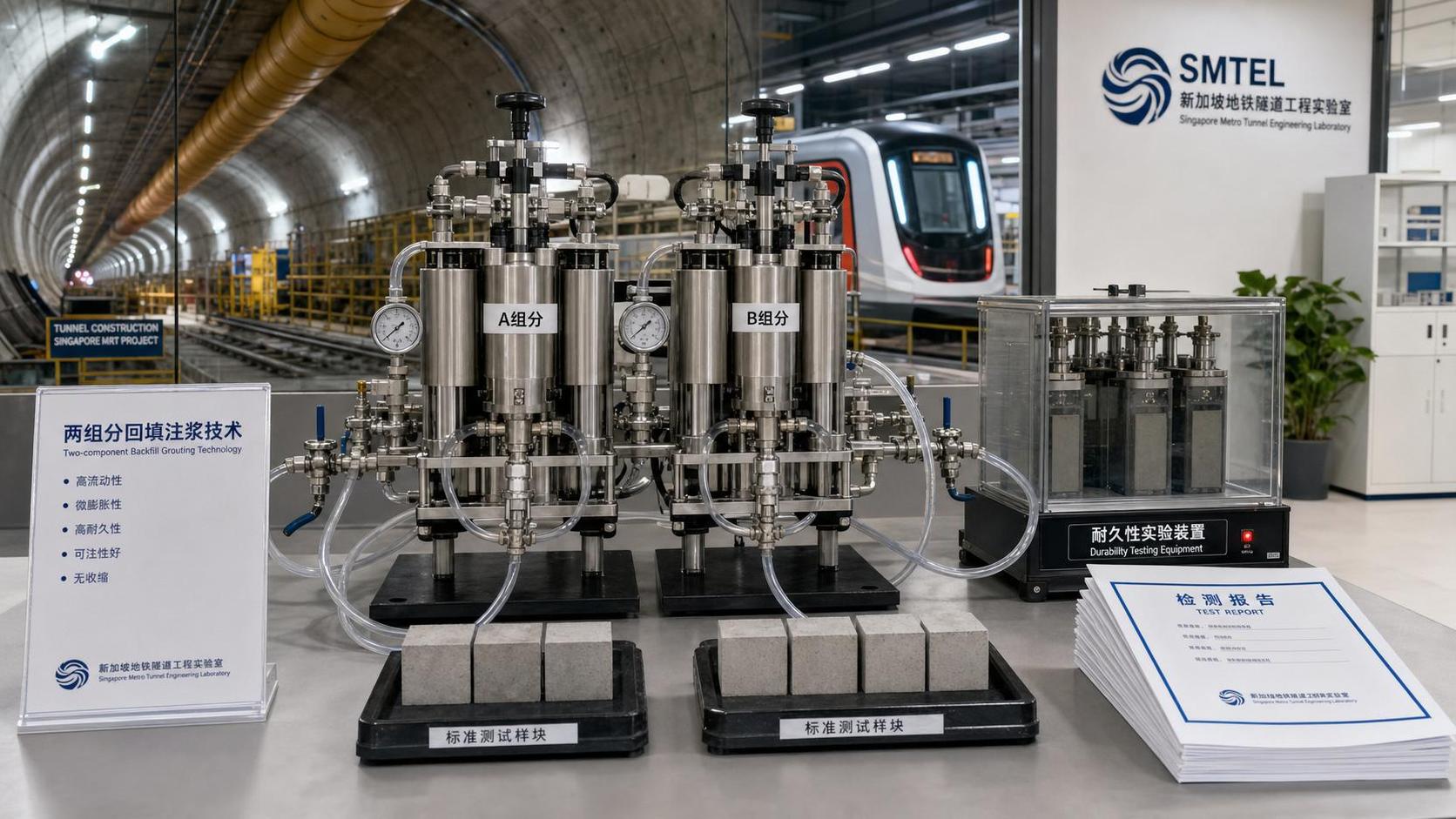
On July 2, 2026, Singapore’s Land Transport Authority (LTA) introduced a supplementary procurement requirement for MRT Line 6 Phase II that adds a local durability testing condition for Two-component Backfill Grouting systems. For suppliers, contractors, and export-oriented equipment makers, the issue is not only technical compliance but also whether testing, documentation, and local service response can fit within bid execution and delivery schedules.
What the new procurement clause requires
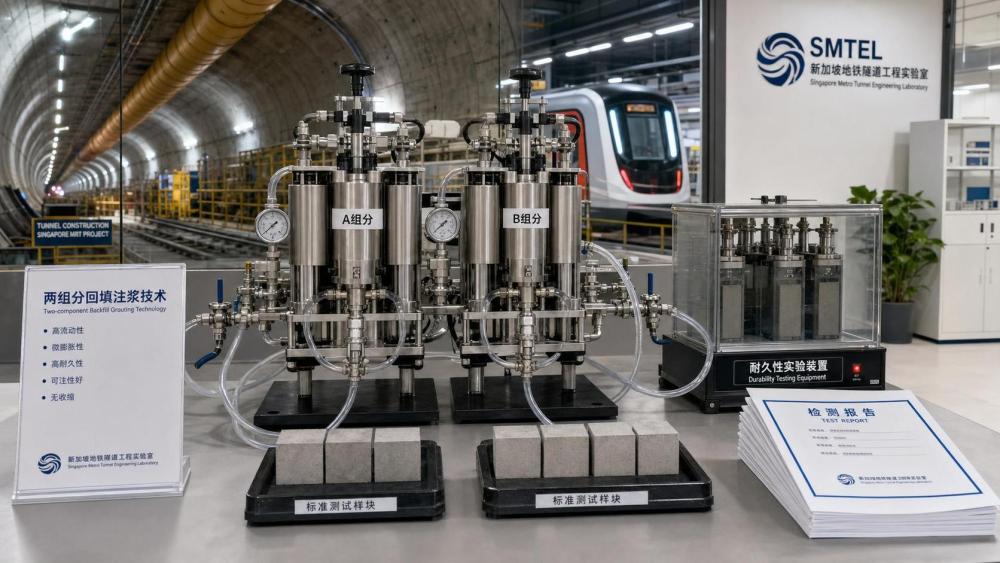
According to the information provided, LTA released supplementary procurement terms for MRT Line 6 Phase II on July 2, 2026. Under the new requirement, all awarded suppliers of Two-component Backfill Grouting equipment must complete a 90-day accelerated aging test covering humid-heat cycling and chloride ion penetration at an LTA-recognized laboratory within 30 days after contract award, and must submit a third-party test report.
The provided information also indicates that this requirement directly affects the delivery schedules and localized service responsiveness of Chinese grouting equipment exporters. In response, some manufacturers have already begun pre-certification cooperation with NTU’s civil engineering laboratory in Singapore.
Where the pressure is likely to appear first
Export equipment suppliers face a tighter post-award timetable
From an industry perspective, suppliers that depend on cross-border delivery may be affected first because the requirement is tied to a 30-day post-award window while the test itself is defined around a 90-day accelerated durability program. The immediate pressure is likely to fall on compliance planning, test scheduling, and readiness of third-party reporting materials.
Local laboratory coordination becomes part of project execution
For project teams and service providers, the operational issue is no longer limited to equipment supply. Coordination with an LTA-recognized laboratory becomes a practical part of delivery preparation, especially where documentation, sample handling, and test booking may influence downstream timing.
Procurement and contractor teams will need closer supplier screening
For buyers and contracting parties, this change may affect supplier selection criteria. Analysis shows that technical capability alone may be insufficient if a bidder cannot demonstrate a workable path for local testing, third-party reporting, and timely response after award.
What companies should watch now
Whether further official clarification follows
What deserves closer attention is whether LTA later provides additional clarification on implementation details, accepted testing workflows, or document expectations. At this stage, the confirmed fact is the new testing and reporting requirement itself; any operational interpretation still needs to be checked against future official wording.
How the 30-day requirement is handled in real project planning
For companies preparing bids or supply plans, the key practical question is how to align award timing, laboratory access, and report issuance. This matters directly for delivery commitments, internal scheduling, and client communication.
Whether local support capacity becomes a competitive threshold
Observably, the issue is not only product performance but also response speed in Singapore. Companies with local technical coordination, document support, or pre-arranged laboratory pathways may be better positioned to reduce execution uncertainty.
How pre-certification efforts affect commercial discussions
The provided information notes that some manufacturers have started pre-certification cooperation with NTU’s civil engineering laboratory. For the wider market, this suggests that advance preparation may become part of bid readiness, especially when customers ask for clearer evidence on compliance timing.
Why this reads as more than a routine test clause
Analysis shows that the update should not be read only as a narrow technical adjustment. It points to a stronger emphasis on locally verified durability performance and on the ability of suppliers to complete compliance work within Singapore’s project framework. At the same time, it is still too early to treat this as a confirmed market-wide restructuring, because the available information covers a specific supplementary procurement clause tied to MRT Line 6 Phase II.
It is more appropriate to understand this as a concrete procurement signal with broader relevance for companies involved in grouting equipment exports, project delivery support, and local compliance coordination. Whether it develops into a longer-term procurement pattern still requires continued observation.
How to read the signal at this stage
At present, this development is best understood as a near-term compliance change with possible longer-term implications. The immediate impact lies in testing timelines, third-party reporting, and local responsiveness. The broader industry meaning is that procurement conditions may increasingly evaluate not just equipment supply, but also verification readiness and in-market execution capacity. That makes this a development worth tracking, even though its full downstream effect is not yet settled.
Basis of this article
This article is based on the user-provided news title, event date, and event summary. For developments of this kind, commonly relevant source categories may include official procurement notices, company disclosures, industry association updates, authoritative media reporting, and standard-related technical documents.
No specific official source link was provided in the input, so the underlying announcement and any later clarifications still need continued verification. Follow-up attention should focus on whether LTA issues additional implementation details, whether recognized laboratory arrangements expand, and how suppliers adjust compliance preparation around the new requirement.
Rleated News
Industry Briefing
Get the top 5 industry headlines delivered to your inbox every morning.