
Bering Strait Tunnel Deal Lifts TBM Export Demand
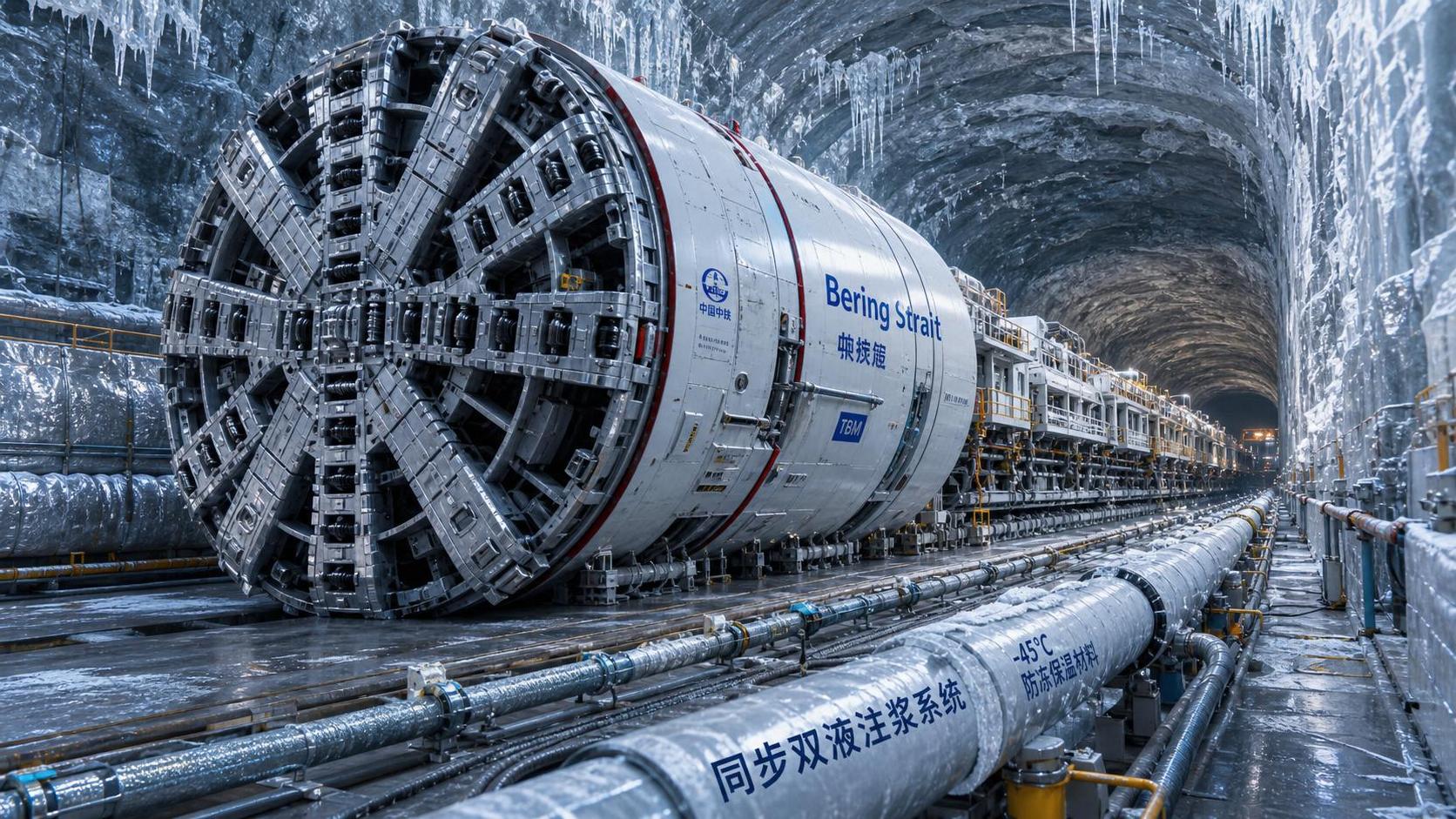
On June 5, 2026, Russia and the United States formally signed an agreement for the Bering Strait subsea tunnel, a 103-kilometer project including an 86-kilometer underwater section. The confirmed technical requirements—hard rock TBMs adapted for extreme cold, EPB shield machines, and two-component synchronous grouting systems—immediately put tunnel equipment makers, grouting system suppliers, materials producers, procurement teams, and compliance specialists on alert. For the industry, the significance is not only the project’s scale, but also the fact that equipment qualification, cold-weather performance, and export readiness are moving to the center of commercial discussions at the same time.
What the signed agreement confirms
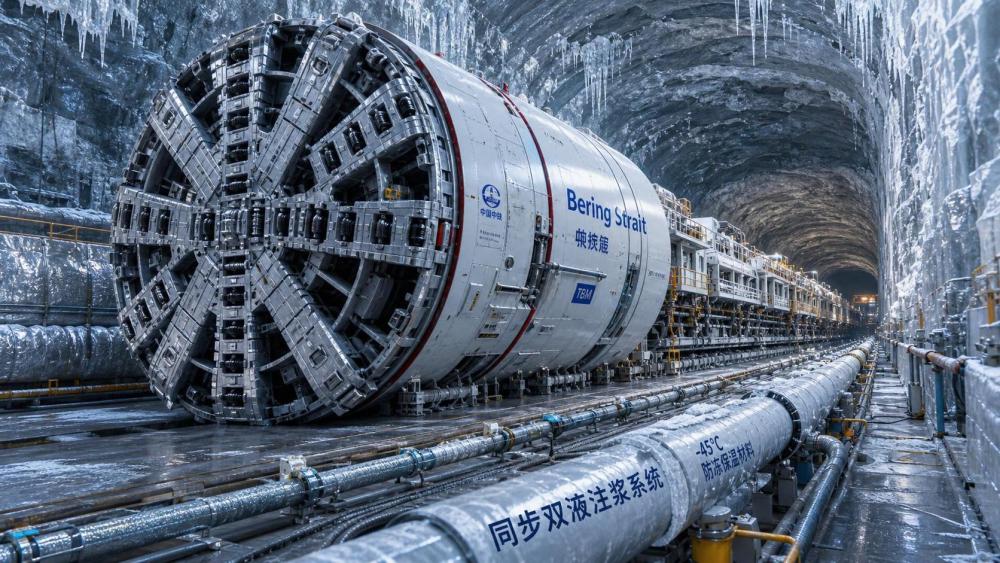
According to the provided information, the agreement was signed on June 5, 2026, by Russia and the United States for construction of a subsea tunnel across the Bering Strait. The project length is 103 kilometers, of which 86 kilometers are underwater, with a total investment of US$8 billion. The agreement explicitly requires the use of hard rock TBMs designed for extreme cold conditions, EPB shield machines, and two-component synchronous grouting systems.
The same information also states that Chinese suppliers were designated as core suppliers of key equipment. Following the signing, urgent international procurement inquiries were triggered for special TBM cutterheads capable of operating at minus 40 degrees Celsius, antifreeze two-component backfill grouting pumps, and antifreeze early-strength grouting materials. Multiple contractors have already begun compliance prequalification reviews for Chinese equipment.
Where the impact is likely to be felt first
Equipment manufacturers face a more technical export cycle
From an industry perspective, manufacturers of hard rock TBMs, EPB machines, and related cutterhead systems are likely to feel the most immediate pressure because the agreement already specifies core equipment categories and environmental adaptation requirements. The main impact is likely to appear in product configuration review, technical documentation preparation, and discussions around cold-climate operating capability rather than in generic sales activity alone.
Grouting system and material suppliers move into the procurement spotlight
Suppliers of two-component synchronous grouting equipment, antifreeze backfill grouting pumps, and early-strength grout materials may see demand shift from routine quotation activity to more urgent project-linked inquiry. What deserves closer attention is whether buyers begin to treat low-temperature adaptability and system compatibility as front-end screening conditions, especially when equipment and material packages need to work together under project-specific requirements.
Contractors and procurement teams must balance urgency with qualification review
For contractors and procurement organizations, the agreement appears to create a dual-track task: responding quickly to urgent sourcing needs while also advancing compliance prequalification for Chinese equipment. The business impact is therefore not limited to price or availability; it also extends to document review, technical comparison, and the timeline needed to move from inquiry to approved vendor status.
Supply chain and export service providers may see higher documentation demands
Observably, service providers involved in export coordination, supply chain support, and technical communication may also be affected because contractor reviews have already started. Their near-term role is likely to center on helping suppliers organize qualification files, clarify product compliance status, and support communication around delivery readiness and technical fit.
What companies should watch now
Track how technical requirements are translated into procurement language
Companies should pay close attention to how the confirmed equipment requirements—extreme-cold hard rock TBMs, EPB shield machines, and two-component synchronous grouting systems—are reflected in actual inquiry documents and prequalification requests. Analysis shows that the commercial importance lies not only in being named within the equipment scope, but in whether the buyer’s documentation defines specific proof standards for low-temperature performance and system suitability.
Prepare compliance and qualification materials early
Since multiple contractors have already launched compliance prequalification reviews for Chinese equipment, suppliers should focus on the completeness and clarity of qualification materials. The practical issue here is not abstract compliance awareness, but whether product documentation, technical specifications, and supporting export materials are ready for third-party review without delaying commercial engagement.
Separate policy-level signals from executable orders
What deserves closer attention is the difference between a strong project signal and confirmed order conversion. The agreement and the resulting urgent inquiries indicate immediate market attention, but companies still need to distinguish between headline demand, qualification-stage screening, and finalized procurement. This distinction matters for production planning, allocation of engineering support, and communication with prospective buyers.
Review delivery and coordination risks around cold-climate specifications
For suppliers already approached by international buyers, current priorities are likely to include internal review of delivery cycles, technical customization capacity, and coordination between equipment and material packages. In this case, preparation is less about broad expansion plans and more about whether a supplier can respond credibly to low-temperature requirements and prequalification questions within a compressed timeline.
Why this looks like a market signal worth tracking
Analysis shows that this development is better understood as a strong early industry signal rather than a fully realized market outcome. The signed agreement clearly identifies equipment categories, environmental requirements, and core supplier positioning, which is why procurement inquiries and compliance reviews are already surfacing. At the same time, the information provided does not confirm final award distribution, shipment schedules, or completed purchasing volumes, so the market still needs to watch how quickly technical interest turns into executable orders.
Observably, the most meaningful aspect at this stage is the combination of three factors: a major subsea tunnel project, explicit low-temperature engineering requirements, and immediate attention to Chinese equipment qualification. That combination suggests the current phase is no longer general market speculation, but it also remains short of a completed procurement cycle.
How to read the current development
For the tunneling and grouting equipment chain, this news points to a concrete near-term shift in buyer attention toward extreme-cold capability, antifreeze system design, and compliance readiness. It is more appropriate to understand this as an actionable procurement and qualification signal with potential longer-term implications, rather than as a completed market result. The industry significance lies in who can convert technical relevance into qualified participation as the project moves forward.
Basis of this article
This article is based on the user-provided news title, event date, and event summary. For developments of this type, relevant source categories often include official announcements, company disclosures, industry association updates, authoritative media coverage, and standard-related technical documents. No specific official source link was provided in the input, so the exact original source chain still requires ongoing verification. Further observation should focus on any subsequent official wording, procurement documents, compliance requirements, and updates on prequalification progress.
Rleated News
Industry Briefing
Get the top 5 industry headlines delivered to your inbox every morning.