
Chile Mandates INN Certification for Tunnel Axial Fans
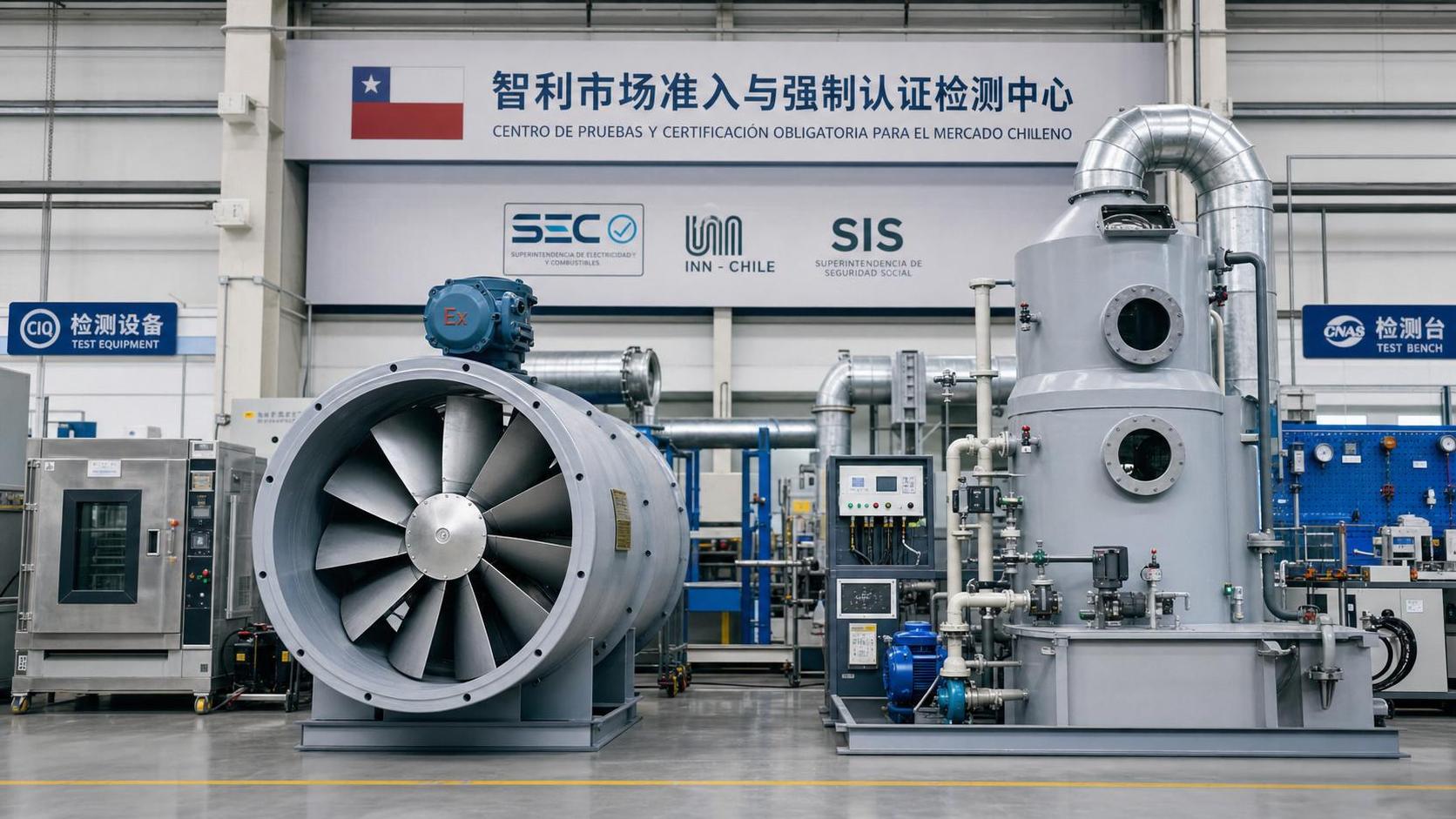
On June 15, 2026, Chile’s National Institute for Standardization (INN) announced that from October 1, 2026, industrial tunnel axial fans and dust scrubbers, including explosion-proof models, must meet the INN NCh 3373.Of2026 standard before they can be imported or sold in the Chilean market. For manufacturers, exporters, importers, and project procurement teams, this is worth close attention because the change turns a previously voluntary framework into a mandatory compliance requirement tied directly to market access.
What the new requirement formally changes
According to the information provided, the new rule applies to all imported and sold industrial tunnel axial fans and dust scrubbers in Chile, including explosion-proof products. These products must obtain certification under INN NCh 3373.Of2026 and carry the INN mark starting on October 1, 2026.
The announced standard adds three specific requirements: IP68 protection rating, continuous high-temperature operation testing at 60°C, and explosion-proof verification in a methane environment. It also replaces the earlier voluntary NCh 2820 standard. For Chinese manufacturers, the notice indicates that localized type testing and factory audits need to be completed in advance.
Where the pressure is likely to appear first
Export-facing manufacturers will feel the compliance shift most directly
From an industry perspective, manufacturers producing tunnel axial fans and dust scrubbers for Chile now face a more formal market-entry threshold. The main impact is likely to fall on product compliance preparation, testing arrangements, technical documentation, and factory review readiness, because certification is no longer optional for covered products.
Importers and distributors need to reassess saleable inventory
Analysis shows that companies responsible for import and distribution may need to focus on whether products scheduled for shipment or sale after October 1, 2026 align with the new INN certification requirement and marking obligation. Their exposure is likely to center on customs clearance preparation, product listing continuity, and coordination with upstream suppliers.
Procurement and project-side buyers may tighten specification checks
For procurement teams and end users sourcing ventilation or dust-handling equipment, the change may affect supplier qualification and acceptance criteria. What deserves closer attention is whether tender, purchasing, or delivery specifications need to reflect the new standard rather than older voluntary references.
Testing and supply chain service providers may see longer coordination cycles
Observably, the requirement for localized type testing and factory audits may lengthen coordination across certification, production scheduling, and shipment planning. The practical impact is not only technical but also procedural, especially where export timelines depend on third-party testing or document completion.
What companies should monitor now
Track how the mandatory standard is described in practice
Companies should pay close attention to any further official wording around product scope, implementation details, and use of the INN mark. The current notice establishes the compliance direction, but businesses still need to align internal interpretations with formal regulatory language as it is applied.
Check whether current models meet the new test points
What deserves closer attention is the gap between existing product specifications and the newly stated requirements for IP68, continuous 60°C operation, and methane-environment explosion-proof verification. Even when products were previously supplied under older practices, those earlier conditions should not be assumed to satisfy the new standard automatically.
Prepare for localized testing and factory review lead time
For Chinese manufacturers in particular, the notice points to advance completion of localized type testing and factory audits. In practical terms, this means export planning, production scheduling, and delivery commitments may need to account for certification sequencing rather than treating compliance as a final-step formality.
Align customer communication and delivery documentation
Suppliers, traders, and distributors may also need to review how they communicate certification status to customers and how they prepare supporting documents for orders bound for Chile. Analysis shows that the distinction between a product being technically capable and being formally certified can become a key issue in transaction execution.
Why this looks like more than a routine standards update
Analysis shows that this development is better understood as a concrete compliance tightening rather than a symbolic policy adjustment. The combination of mandatory certification, product marking, added test requirements, and the replacement of a voluntary standard suggests a clear shift in how Chile intends to manage safety access for these industrial electrical products.
At the same time, it is more appropriate to understand this as a defined regulatory move with ongoing implementation questions, not as a fully closed story. Industry participants still need to watch how certification workflows, product coverage boundaries, and practical enforcement details evolve closer to the October 2026 effective date.
How the market may need to read this signal
From an industry perspective, the immediate meaning of this notice is straightforward: market access for covered products in Chile is becoming more compliance-driven. For companies already active in tunnel ventilation or dust treatment equipment, the issue is less about headline reaction and more about whether certification, testing, and factory review work can be integrated into normal commercial timelines.
It is more appropriate to understand this update as both a short-term operational requirement and a longer-term regulatory signal. In the short term, affected businesses need to prepare for certification and document readiness. In the longer term, the notice indicates that technical and safety verification standards may play a more decisive role in export execution for this product segment.
Basis of this report and what still needs verification
This article is based on the user-provided news title, event date, and event summary concerning Chile’s mandatory electrical product safety standard for tunnel axial fans and related equipment. For this type of development, commonly relevant source categories include official notices, company announcements, industry association updates, authoritative media coverage, and standard-setting documents.
No specific official source link was provided in the input, so the exact source document should continue to be verified in follow-up review. Areas that still warrant ongoing attention include any further official clarification on implementation details, scope interpretation, certification procedures, and related compliance documentation requirements.
Industry Briefing
Get the top 5 industry headlines delivered to your inbox every morning.